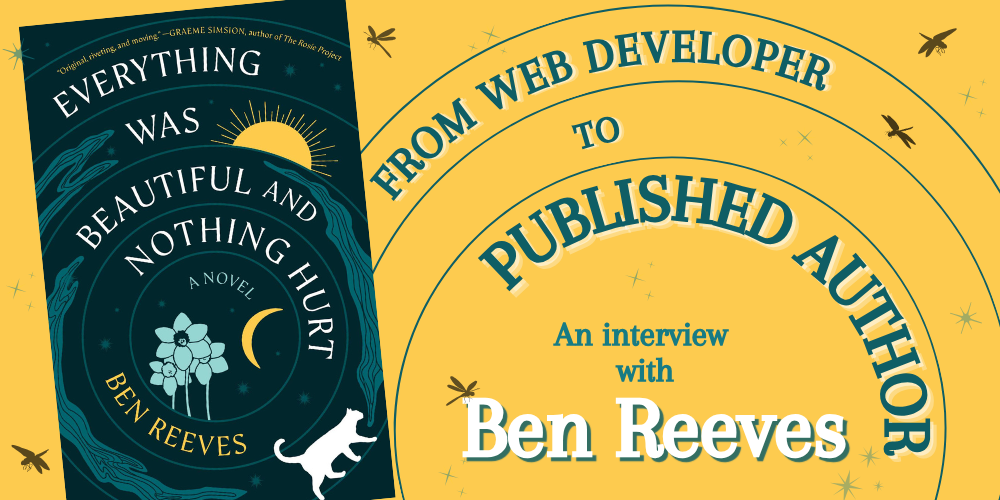
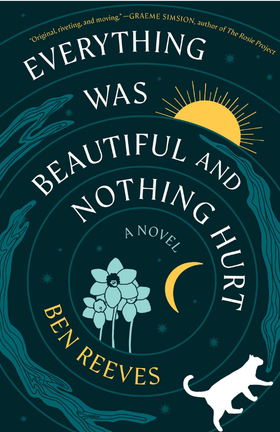
'Everything Was Beautiful and Nothing Hurt' was published on July 7. How does it feel to know the book is now reaching readers in the US?
I love it. It’s cool that it’s published in the UK, but I’m very happy it’s reaching international readers too. I’ve had nothing but support from everyone I’ve met over here.
Can you tell our readers a little about the book?
It’s a book about life, where the main character is Death.
Death is just a normal guy called Travis, in the modern day. He spends time with people in their last moments of life. He listens to their stories, and offers comfort, and never judges or interferes. One day he meets a little family who changes him forever.
It’s a book that makes people cry, but I’ve also been told it’s very warm and life-affirming.
This is your first published novel. What has surprised you most about the publishing process so far?
The biggest eye-opener has been meeting the booksellers. They pour so much energy and passion into helping to get new books out into the world. I feel like they’re the unsung heroes of literature. It’s not something I’d really thought about before being published. Make sure to support your local indie bookshops when you can.
Do you remember the first idea or image that made you think, “There’s a novel here”?
When I decided I’d tell a novel from the point of view of Death in the modern day, I knew I was onto something. There have been other books and films where Death is the main character, but I wanted to create my own original take on it. At some point I decided he should be very connected to the world around him, and to nature, and that’s when it started to feel special.
You work behind the scenes at Young Writers and Book Printing UK, helping other people’s work get published. What was it like when the book being published was finally yours?
It was a bit of a relief. I’ve spent many years wondering if it would ever happen. There was a big part of me that believed it never would, but now it has, and I’m glad I kept going. I’m also feeling a new kind of pressure for my next book, which I’ve never felt before. It’s a good pressure, though.
What has working with young writers taught you about creativity, confidence or taking your own ideas seriously?
The most important thing is to enjoy it. Unless you enjoy it, there’s no point. Even if I was never published, I’d be happy that I wrote books I was proud of, and that I had fun writing them. Never do something creative just for accolades, or money, or anything like that. Do it for the love of the craft, because you want to make the best things you can make.
An early draft of the novel won the 2024 Bath Novel Award. What did that recognition mean to you at that stage?
Of all the things that have happened, that might be the most special to me. I’ve written for so long – about 20 years – and never really received any recognition for it, beyond family and friends, and a couple of smaller competitions. The Bath Novel Award was the first time I realised I’d done something that people liked. I wasn’t expecting it. The book might not have been published without it.
Many writers dream of having a novel published. What would you say to someone who has a story idea but doesn’t know where to start?
Just start. Write anything. Write notes about your story idea, and the story world. Don’t overthink it. Don’t worry if it feels rubbish at first. That’s normal. There’s a common saying – you can’t edit a blank page! So write as much as you can, and read as much as you can, and figure out what sort of stories you enjoy most, and then just try your best. Like any skill, it comes with practice. The only way to practice is to write.
What is one writing habit you wish you had started earlier?
It took me a long time to realise that there is actually ‘good’ writing and ‘bad’ writing. Of course we can write whatever we want. And of course it’s subjective. But there are certain techniques and patterns and ways of thinking that will elevate your writing, to make it more exciting, or more emotional, or more frightening, or whatever you want it to be. Thankfully, there are lots of books and videos to help you learn these things. Some of it is useful, some of it isn’t. You take what you need. But I wish someone had put a ‘how to write’ book in my hands sooner.
What’s the best piece of writing advice you’ve ever received?
There’s so much, so let me give you three, for beginners.
“Show, don’t tell”. It’s a very common piece of advice, but an important one. Don’t just tell me the story, let it unfold though the characters and their actions.
Stories are about conflict and change. If there’s no conflict, there’s no story. If nothing changes, what was the point in reading it? Sometimes it’s good to treat your story like a series of dominoes falling down. They’re not just disconnected scenes – each one propels the next one. ‘This happens’ and because of that ‘this happens’.
And, as I’ve said, enjoy it. Writing is one of the most special things you can do with your time. Write what excites you. Pour your whole self into it.